Heat Tracing Cable Sizing for Pipe Freeze Protection
Heat tracing is not about heating the pipe to a comfortable temperature; it is about replacing exactly the heat the pipe loses to its surroundings. Oversize the cable and you waste energy and risk damaging temperature-sensitive media. Undersize it and the pipe freezes on the coldest night of the year. The sizing method below is the one used for freeze protection on water and process lines.
Why self-regulating cable
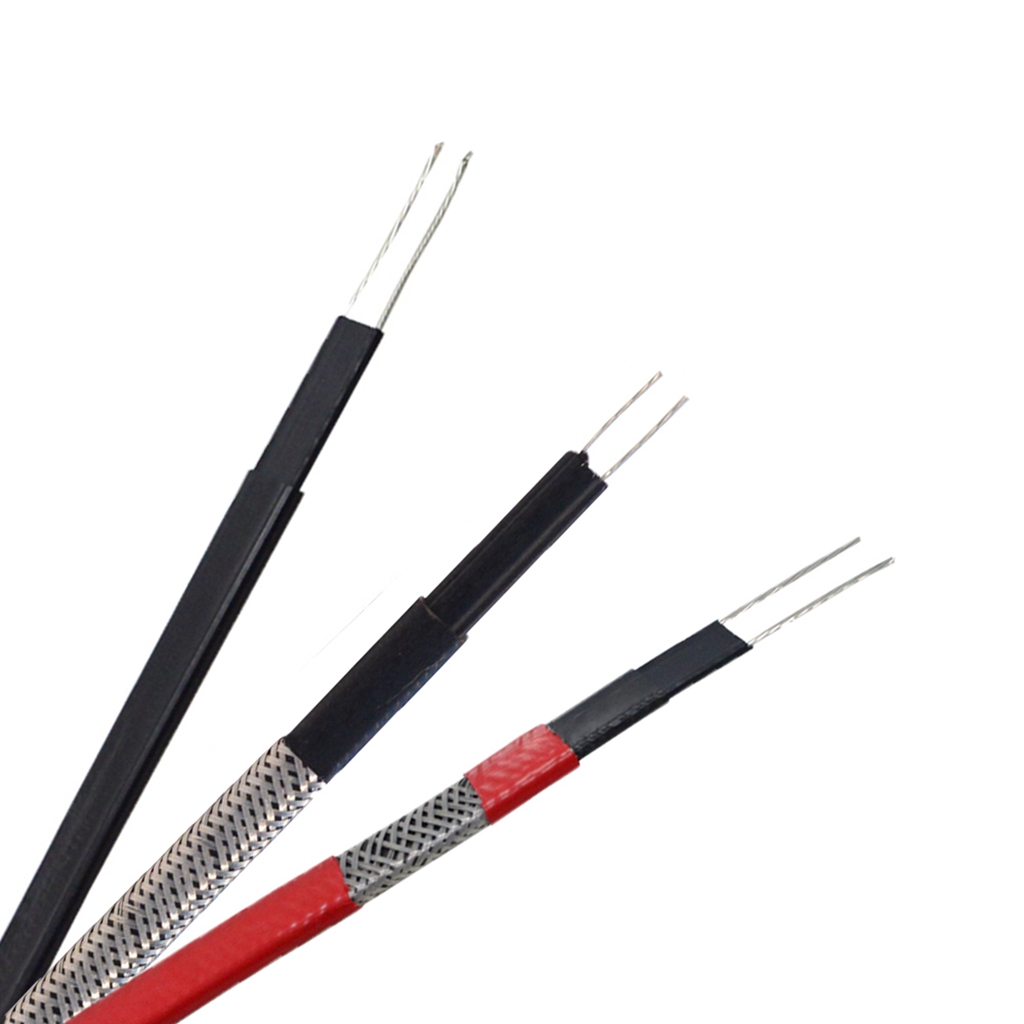
Self-regulating (self-limiting) cable contains a conductive polymer core whose resistance rises as it warms. Cold sections of the run draw more power; warm sections draw less. That means the cable inherently adjusts along its length, can be cut to length in the field on many designs, and will not overheat where it crosses itself — a real advantage over constant-wattage cable on complex pipework.
The sizing steps
- Define the design conditions — lowest ambient temperature at the site, required maintain temperature (often just above freezing for water lines), and whether the pipe is exposed to wind.
- Measure the pipe — nominal diameter and material. Larger pipes lose more heat per metre simply because they have more surface area.
- Specify the insulation — type, thickness and thermal conductivity. Insulation quality usually has a bigger effect on required wattage than the cable itself, and damaged or wet insulation is the most common cause of a system that 'doesn't work'.
- Calculate heat loss per metre using the pipe/insulation data and the temperature difference; heat loss tables from cable manufacturers are the standard shortcut.
- Select a cable whose rated output at the maintain temperature exceeds the calculated loss, then add margin for ageing and voltage variation.
- Add the extras — valves, flanges, pumps and pipe supports lose far more heat than straight pipe. Allow extra cable at each one, or use a higher-loss factor for the whole run.
Installation details that decide success
Run the cable along the lower quadrant of the pipe (typically the 4 or 8 o'clock position), secure it with approved tape at the recommended interval, and never spiral it unless the design specifically calls for it. Fit weatherproof end seals and power connection kits, keep the cable off sharp edges, and install thermal insulation immediately after testing. Label the circuit at the distribution board so maintenance staff know the cable is present before drilling or cutting.
Use a thermostat or ambient-sensing controller so the system runs only when needed, and consider ground-fault protection — most codes require it for heat tracing circuits.
Information to send with an enquiry
Pipe diameter and length, fluid and required maintain temperature, minimum site ambient temperature, insulation type and thickness, indoor/outdoor and any hazardous-area classification, supply voltage, and the number of valves and fittings. With those details a supplier can produce a proper circuit layout instead of a guess.
Frequently asked questions
Can self-regulating cable be cut to length on site?
Many self-regulating designs allow cutting to length within specified maximum circuit limits, but always confirm with the exact product datasheet and use the manufacturer's termination kits. Constant-wattage cable generally cannot be cut.
Do I still need insulation?
Yes. Heat tracing without insulation is almost never economical — the cable would be fighting open-air losses. Insulation is part of the system design, not an optional extra.
Can heat tracing be used to maintain process temperature, not just prevent freezing?
Yes, but the heat loss calculation must use the higher maintain temperature, and the cable's rated output at that temperature must be checked. Higher-temperature duty may call for a different cable family.