PTC Cabinet Heaters: Preventing Condensation in Outdoor Enclosures
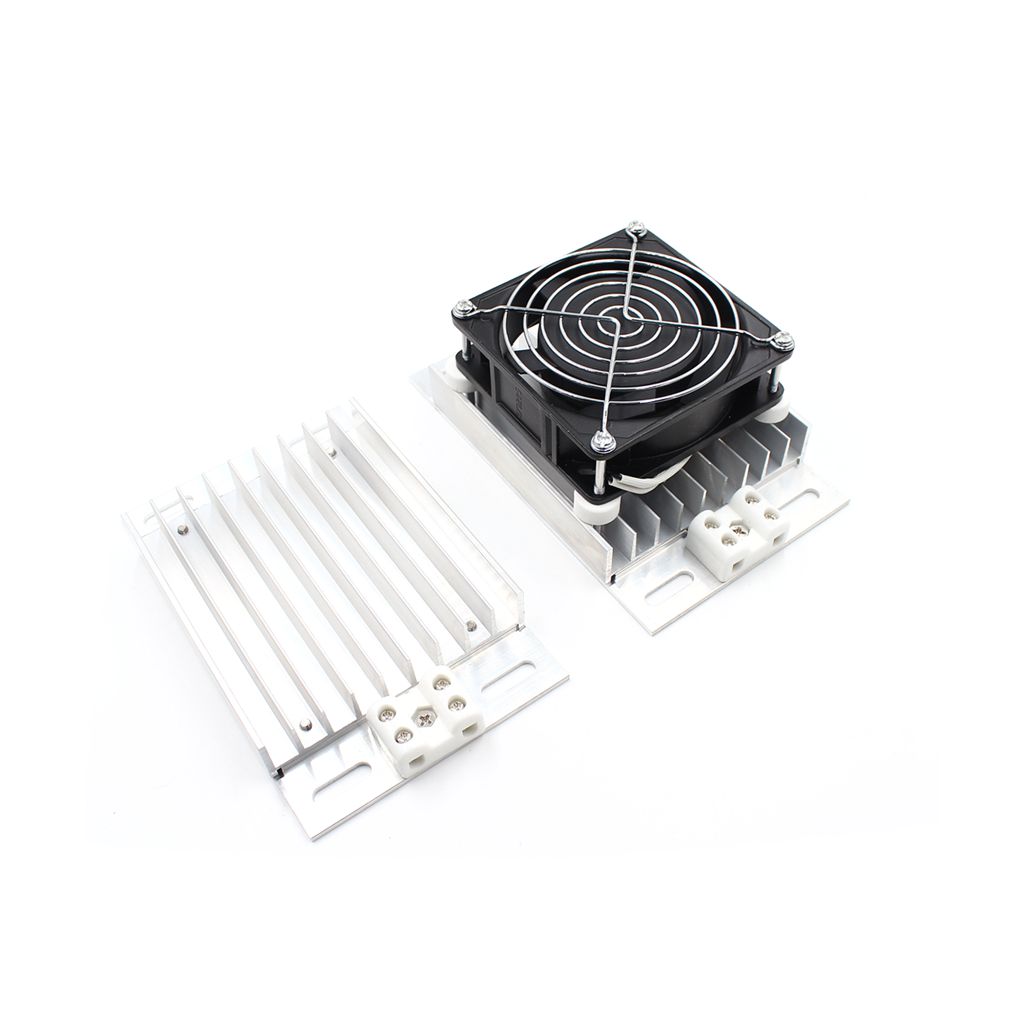
An outdoor control cabinet can be perfectly sealed and still fill with water. When the internal air cools below its dew point overnight, moisture condenses on terminals, PCBs and relay contacts — causing tracking, corrosion and intermittent faults that are notoriously hard to diagnose. The standard cure is not more sealing; it is a small, continuously available heat source that keeps the internal air above the dew point.
Why PTC is the right technology here
PTC (positive temperature coefficient) ceramic elements increase their resistance sharply as they warm up. At switch-on they draw high power and heat quickly; as they reach their characteristic temperature, power falls automatically to whatever is needed to hold that temperature.
That self-regulating behaviour matters in a cabinet: there is no glowing element that needs a separate thermostat to avoid overheating, no control loop to fail, and no risk of a runaway condition if airflow is blocked. The heater simply cannot exceed its design temperature in normal operation.
Sizing: think heat loss, not cabinet volume
A common mistake is sizing by cabinet volume alone. What actually matters is how much heat escapes through the enclosure walls. Work from:
- Exposed surface area of the cabinet (not its internal volume).
- Wall material and thickness, plus any insulation or sun shield.
- Required internal temperature rise above the lowest ambient temperature at the site.
- Wind exposure, which increases convective loss on outdoor installations.
From those inputs, estimate the steady-state heat loss in watts and select a heater with modest headroom. Oversizing is usually harmless with PTC because output falls as the cabinet warms, but it increases energy use during cold snaps. For large or heavily ventilated enclosures, two smaller heaters placed apart give more even temperature than one large unit.
Placement and airflow
Mount the heater low in the cabinet, on a vertical surface, with clear space above it so convection can circulate warm air through the whole enclosure. Keep it away from sensitive electronics and from cable bundles, and leave a gap around the housing for maintenance. Where humidity is the trigger rather than temperature, a hygrostat switches the heater on only when relative humidity rises — often cutting energy use substantially compared with running continuously.
A practical specification checklist
When requesting a quote, include: supply voltage (AC or DC), required wattage or the enclosure size and site conditions, DIN rail or screw mounting, IP rating, terminal type, whether a fan or hygrostat is needed, and the lowest expected ambient temperature. Also state whether the cabinet contains components with a minimum operating temperature, since that may set the internal target rather than the dew point alone.
Frequently asked questions
Does a PTC heater need a separate thermostat?
Not for safety — the element self-limits. A thermostat or hygrostat is still useful for energy efficiency and for switching the heater off in warm weather.
Can PTC cabinet heaters run on DC?
Many models are available in both AC and DC voltages, which is useful for battery-backed, solar and telecom cabinets. Specify the supply voltage when ordering.
Is a fan necessary?
Small sealed cabinets usually rely on natural convection. Fan-assisted units help in tall or densely packed enclosures where air would otherwise stratify and leave cold spots.